
Description
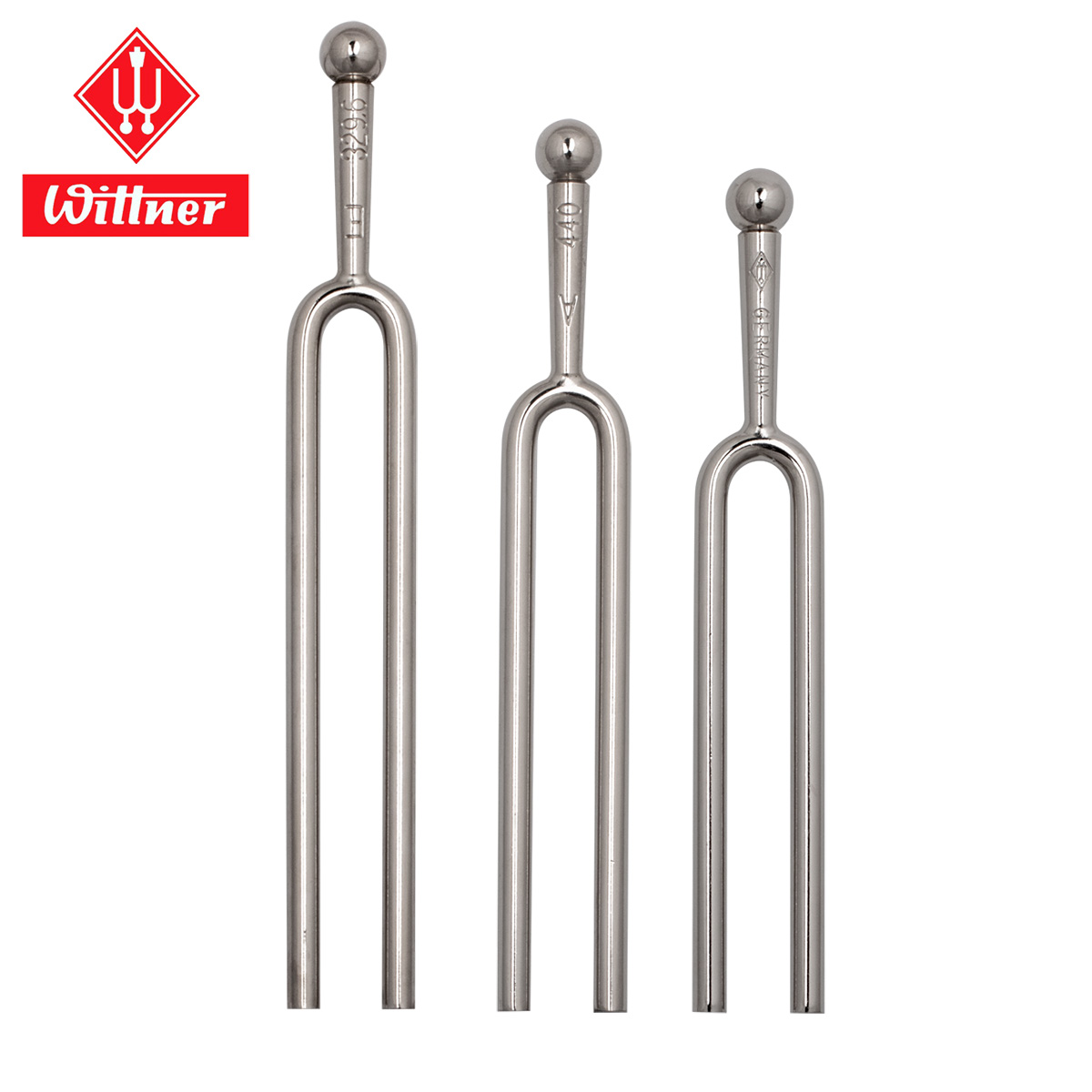
The Wittner Tuning Fork represents a long-standing standard in acoustic pitch reference. Manufactured in Germany, these forks are precision-engineered to deliver a clean, sustained fundamental frequency with minimal harmonic distortion. For decades, instrument technicians, choral directors, and acoustic string players have relied on physical tuning forks for their unwavering accuracy, independent of batteries or electronic calibration. The nickel-plated construction ensures structural stability against temperature fluctuations, maintaining strict pitch integrity in varying environmental conditions.
Whether used for setting the intonation on a grand piano, tuning a violin section, or providing a starting pitch for a vocal ensemble, the Wittner tuning fork provides an immediate and reliable acoustic baseline. It remains an essential bench tool for luthiers and a practical gear-bag staple for classical and acoustic performers requiring an absolute reference point.
Who Is This For?
This tool is essential for luthiers, acoustic instrument technicians, choral directors, and classical musicians who require an absolute, physical pitch reference. It is particularly valuable for string players, piano tuners, and vocalists who train their ears to pure acoustic intervals rather than relying exclusively on electronic digital tuners.
Key Features
Build Materials & Construction Crafted with a durable nickel plating, these tuning forks are engineered for long-term stability and resistance to corrosion. The rigid material ensures that the pitch remains constant despite environmental changes, providing a reliable reference for professional intonation work and daily tuning routines.
Acoustic Performance & Resonance Featuring a specific 4.5mm fork tine diameter, the structural mass of the tines generates a strong, sustained fundamental tone. When struck, the fork delivers a pure sine wave with minimal overtone interference, making it exceptionally easy for the human ear to isolate and match the target pitch accurately.
Ergonomics & Practicality The base of each fork terminates in a smooth, spherical ball end, which provides a comfortable grip when striking and holding the instrument. This specific design also allows for highly efficient vibration transfer when the base is placed directly against a resonant surface, such as a guitar soundboard or violin bridge, naturally amplifying the tone for easier listening in a busy room.
Available Variations
- TF3E E329.6: Pitch E (329.6 Hz) – Size: 12.9cm (L)
- TF4A A440: Pitch A (440 Hz) – Normal size: 11.6cm (L)
- TF5C C523.3: Pitch C (523.3 Hz) – Size: 11.2cm (L)